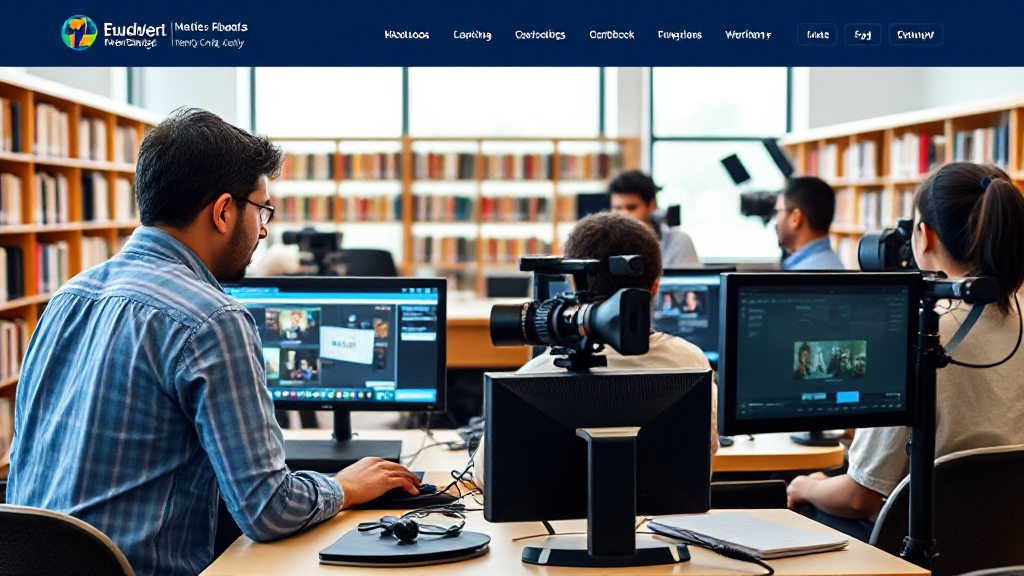
Turning Informal Experience Into Formal Recognition
Years of unpaid editing, wedding videography and community theatre add up to something real. The hours you have spent cutting a friend’s short film, recording a cousin’s wedding, running sound for a local play or managing social media for a neighbourhood group are not just favours. They are evidence of skill. Recognition is the process that makes that evidence visible, and it is the reason a growing number of working adults are turning to structured assessment instead of chasing unfamiliar terms that promise quick answers. If you have been searching for mega888 in the hope of finding a shortcut, the more useful path is understanding how prior learning is actually recognised, documented and assessed.
As an assessor who has reviewed hundreds of portfolios from people with informal media backgrounds, I have seen the same pattern repeatedly. Candidates arrive convinced they have no formal proof of competence. Then they start listing what they have done, and within an hour the evidence is on the table. The challenge is not a lack of skill. The challenge is organising that skill into a form an assessor can verify against a recognised standard.
Why Informal Experience Deserves a Second Look
Most people who work in media and entertainment did not begin with a certificate. They began by helping out. A friend needed an editor, so they learned editing. A community group needed someone to film an event, so they picked up a camera. A small business needed posts for social media, so they taught themselves design and scheduling. Over months and years, those small tasks compound into a genuine body of work.
The problem is that this body of work is scattered. It lives in phone galleries, old hard drives, half-forgotten YouTube channels and the memories of people who were there. Formal recognition takes that scattered experience and turns it into a structured claim: here is what I can do, here is the evidence, and here is a recognised framework that confirms it. That framework matters because employers, training partners and educational institutions need a shared language for competence. Without it, a talented self-taught editor and someone who has never touched editing software can look the same on paper.
This is where the concept of Recognition of Prior Learning, often shortened to RPL, becomes practical rather than abstract. It is not a loophole. It is an assessment pathway designed for people whose learning happened outside a classroom. The media and entertainment sector is full of such people, which is exactly why the process exists.
The Worked Candidate: Meera’s Scattered Portfolio
Consider Meera, a candidate I assessed last year. She had never held a job with a media title. She worked part-time in a retail store. But over six years she had edited more than forty wedding videos, filmed three community theatre productions, managed the social media accounts for two local businesses, and produced a short documentary about her neighbourhood’s waste collection problem that had been screened at a community centre.
When Meera first contacted us, she described her experience as “just helping out.” She did not think any of it counted. She had spent weeks reading about mega888 and similar terms online, hoping to find a simple route to a credential. What she actually needed was a structured conversation about what she had already done.
Together we mapped her work against the relevant competency standards. Her wedding videography demonstrated camera operation, lighting setup and client communication. Her editing work showed proficiency with timelines, colour correction and audio syncing. Her social media management covered content planning, audience analysis and basic analytics. The documentary added research, interviewing and narrative structuring. None of these were formal jobs, but all of them produced artefacts that could be examined.
Meera’s case is not unusual. It is the norm. The candidates who succeed in RPL are rarely the ones with the most impressive titles. They are the ones willing to do the patient work of gathering evidence and reflecting on what it demonstrates.
Step One: Gathering Evidence That Actually Counts
The first stage of any RPL process is evidence gathering, and it is where most candidates either succeed or stall. The instinct is to collect everything. The better approach is to collect selectively and annotate carefully.
Useful evidence falls into several categories. Direct artefacts include video files, edited sequences, audio recordings, photographs, scripts, storyboards, social media posts and analytics screenshots. Indirect evidence includes testimonials from clients or collaborators, letters from community organisations, and records of screenings or exhibitions. Reflective evidence is the candidate’s own written account of what they did, what decisions they made and what they learned. That third category is often undervalued, yet it is frequently the most persuasive because it shows how the candidate thinks.
For each piece of evidence, the candidate should answer three questions: What was the task? What did I personally do? What was the result? A wedding video alone proves little. A wedding video accompanied by a note explaining that the candidate handled camera setup, shot the ceremony solo, edited a twelve-minute highlight reel and delivered within a week tells an assessor exactly which competencies are in play.
Meera initially sent a link to a folder with hundreds of files and no context. We asked her to select ten pieces that best represented the range of her work and to write a short note for each. That selection process forced her to think like a professional, and it made her portfolio far stronger.
Step Two: Mapping Experience to Recognised Standards
Once evidence is gathered, the next step is mapping it against the standards used by the awarding body. This is where the process becomes technical, and where an assessor’s guidance is most valuable. The candidate does not need to memorise the standards, but they do need to understand that recognition is not a general judgment of talent. It is a specific judgment about whether particular competencies have been demonstrated.
In the media and entertainment context, competencies might include operating a camera safely, setting up basic lighting, editing to a brief, managing production schedules, coordinating with talent, or maintaining equipment. Each competency has performance criteria, and each criterion needs evidence. A candidate might be strong in editing but weak in production management. The mapping process reveals these gaps honestly, which is far better than discovering them during assessment.
This is also the stage where candidates often realise that some of their informal work does not map cleanly. Perhaps they edited videos but never worked to a client brief. Perhaps they filmed events but never handled audio independently. That is not a failure. It is useful information. It tells the candidate what additional evidence to seek or what training to pursue before assessment.
Meera’s mapping revealed that her strongest areas were camera operation and editing, with solid evidence in content planning. Her weakest area was formal production documentation. She had never written a shot list or a production schedule. Rather than abandon the process, she spent two weekends creating documentation for a small personal project, which gave her the missing evidence. This is the kind of practical adjustment that makes RPL work.
Step Three: The Assessment Itself
Assessment formats vary, but most RPL assessments combine a portfolio review with a professional conversation. The portfolio review examines the evidence against the standards. The conversation allows the assessor to probe the candidate’s understanding, clarify ambiguities and confirm that the work is genuinely the candidate’s own.
Candidates are often nervous about the conversation, imagining it as an interrogation. In practice, it is closer to a structured professional discussion. The assessor asks how a particular edit was approached, why a certain shot was chosen, what went wrong on a shoot and how it was handled. These questions are not traps. They are designed to surface the reasoning that sits behind the artefacts.
Meera’s conversation lasted about ninety minutes. She walked the assessor through her documentary, explaining how she had persuaded interviewees to participate, how she had structured the narrative and how she had solved an audio problem in post-production. By the end, the assessor had a clear picture of her competence. The portfolio provided the proof; the conversation provided the context.
Where gaps remain, the assessor may recommend additional evidence or targeted training. This is not a rejection. It is a roadmap. Many candidates complete their recognition in stages, addressing one competency area at a time. The process is designed to be fair to people with busy lives and non-linear career paths.
Why Chasing Unfamiliar Terms Adds Nothing
It is understandable that people search for shortcuts. When you have years of experience but no certificate, it is tempting to look for a term or a programme that promises to convert experience into credentials quickly. Searches for mega888 and similar phrases often reflect that hope. But no unfamiliar term changes the underlying process. Recognition still requires evidence, mapping and assessment.
The real value lies in understanding the pathway, not in chasing vocabulary. A candidate who understands how evidence is gathered, how standards are mapped and how assessment is conducted is in a far stronger position than one who has memorised a dozen search terms. The former can prepare properly. The latter keeps looking for a door that does not exist.
What does exist is a structured, legitimate process for turning informal experience into formal recognition. It is used across sectors, and it is particularly relevant in media and entertainment, where so much learning happens on the job, in community settings and through personal projects. The process respects that learning. It does not ask candidates to pretend they took a course they never took. It asks them to demonstrate what they can actually do.
For working adults with informal media experience, the most useful next step is not another search. It is a conversation with an assessor or a training partner about what evidence you already have and how it might be mapped. Meera started with a folder of unlabelled files and a vague sense that her experience did not count. She finished with a recognised credential and a clearer understanding of her own professional strengths. That transformation is available to anyone willing to do the patient work of making their experience visible.